
2025 MURAL SPECIES!
gray wolf
Ojibwe: Ma'iingan
Latin: Canis lupus

STATUS:
US STATUS: LE - Listed Endangered
MI STATUS: SC - Special Concern
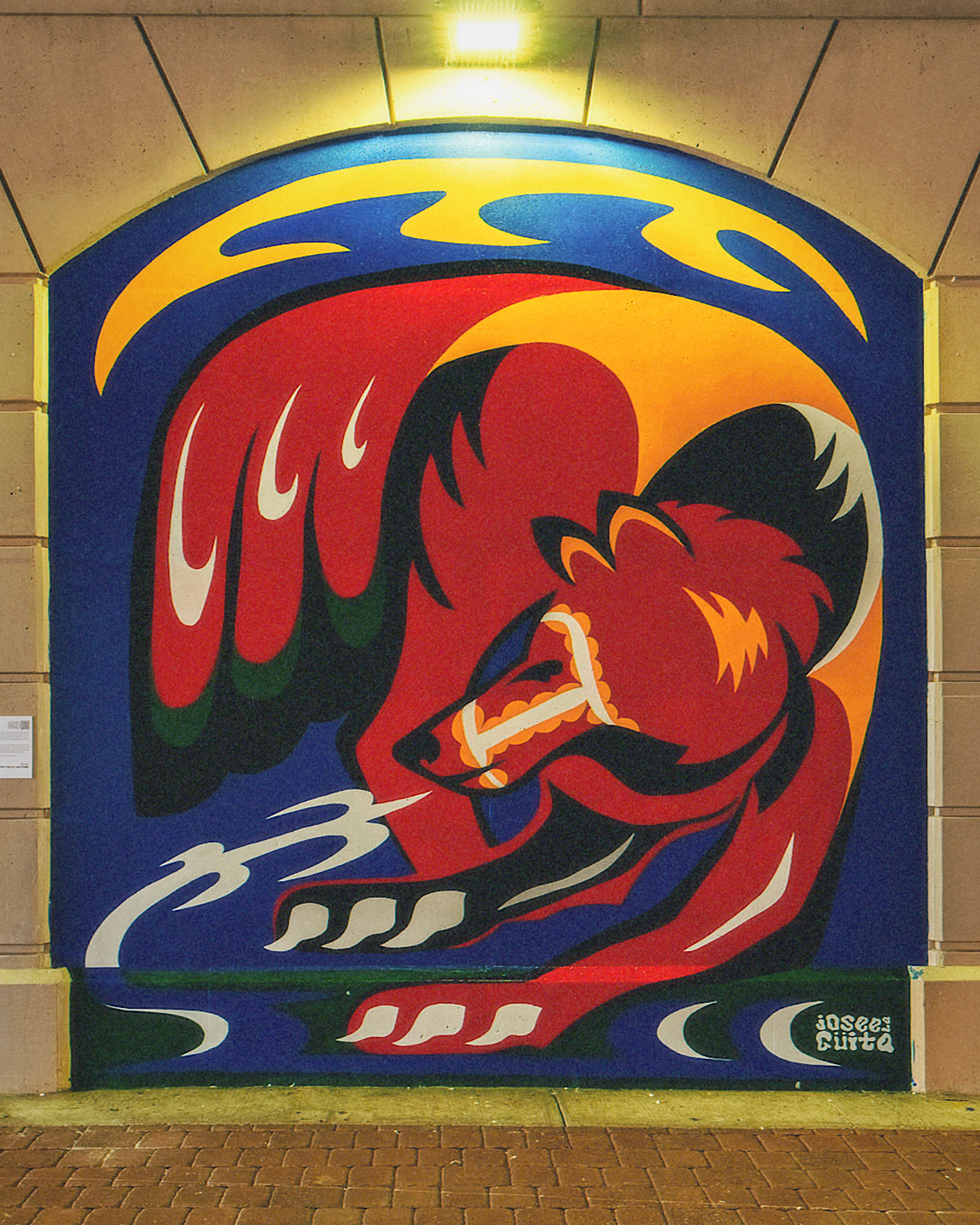


ARTIST:
LA GUÏTA
Bringing magic and folklore to life, La Güita (she/her) is a Calgary-based Nicaraguan-Canadian artist whose murals and illustrations burst with vivid colour and movement that lean into the sacredness of identity. Her work transforms public spaces into dreamlike landscapes that celebrate ancestry and joy.
Find more of Güita’s work here!
EDUCATOR:
GARY ROLOFF
Gary is a professor in the Department of Fisheries and Wildlife at Michigan State University. His interests center on the effects of forestry on wildlife and working with tribal nations on wildlife topics.
Visit our Gray Wolf mural in downtown Grand Rapids at 56 Front Avenue NW!
Description:
Wolves are the largest wild member of the dog family, between 4.5 and 6 feet (1.4 - 1.8 m) in length (nose to tail) and covered in a grizzled gray coat with a darker shoulder mantle. The tail is approximately 1.5 feet (0.5 m) long. Average weight is from 58 - 67 pounds (26 - 30 kg) with a maximum of 100 pounds (45 kg). Tracks range from 2.8 to 3.3 inches (7 - 8.3 cm) wide and 3.7 to 5.5 inches (9.5 - 14 cm) long and have pronounced claw marks, unlike wild cats.

Habitat and Occurrence
If you’re looking to find a Gray Wolf for yourself, check within the following ecosystems within the green counties on the map!
All information on this page is generously provided by the Michigan Natural Features Inventory (MNFI). For more information about Gray Wolves - visit the species description here: mnfi.anr.msu.edu/gray-wolf. To learn more about Michigan’s biodiversity, ecological communities and natural heritage, visit mnfi.anr.msu.edu
get involved with gray wolf conservation!
While there are currently no Community Science projects specifically operating to benefit the preservation of Gray Wolves in Michigan, there are many organizations who work to protect the habitats where it resides! Volunteer with some of these organizations and help protect the habitat that Gray Wolves needs in order to survive.
report an observation
MNFI stewards the Michigan Natural Heritage Database and track observations of some of Michigan’s rarest forms of life to fully understand the population and range of rare species to protect biodiversity in Michigan. If you have encountered a Gray Wolf, you can share the location information with these trusted conservation professionals here: mnfi.anr.msu.edu/species/report